
FOREWORD
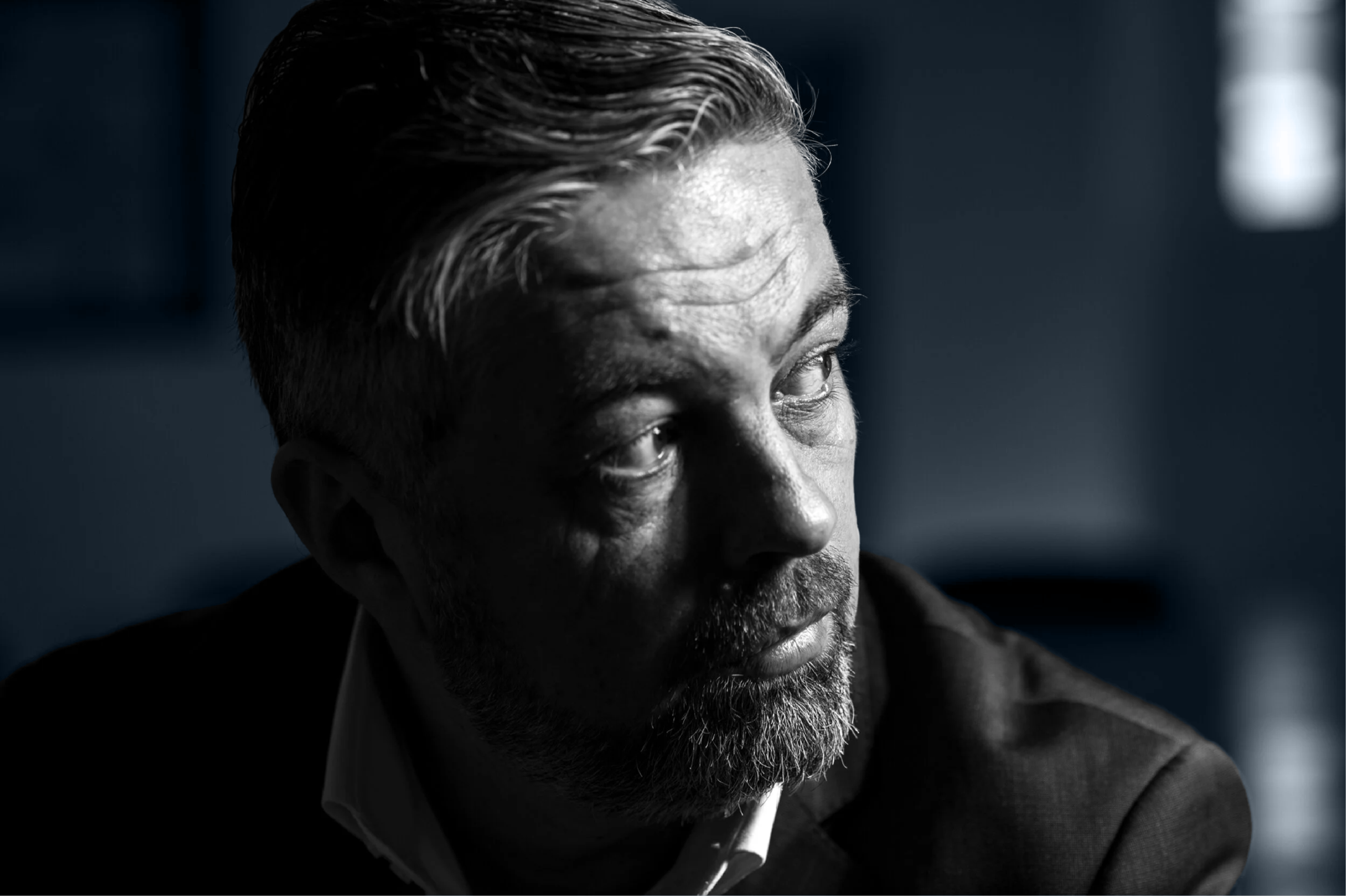
Haftor Medbøe, Chair, Scottish Jazz Archive
As Scotland’s jazz enjoys a popular resurgence, this is a truly exciting time to be leading the Scottish Jazz Archive as it moves into the most ambitious phase of its development and growth.
The contemporary Scottish jazz scene is (quite rightly) gaining recognition both nationally and internationally through successes at the Scottish Album of the Year, the Mercury Prize, and the soundtrack selection for Spike Lee’s recent feature film, Highest 2 Lowest. These achievements are built on solid foundations: a century-long engagement with jazz in Scotland that spans the Dance Band era of the 1930s and 40s, the Trad Revival of the 1950s and 60s, and the cross-cultural innovations that followed. Since the 1970s, Scotland’s musicians have contributed significantly to the global jazz scene, reimagining a music of Black American origin as a powerful expression of its own local contexts.
The history of jazz in Scotland is bursting with vivid stories of individuals, bands, venues and festivals that weave together as a cultural continuum, connecting us to our past while inviting us to imagine bold futures. The intersections of people, places and music with social and political histories shed new light on local identities and Scotland’s place in the world.
The Scottish Jazz Archive was established in 2019 to ensure those stories are not lost. Since then, we have built quietly and carefully. We have conducted an extensive series of filmed oral history interviews, preserving the voices of older musicians and community figures whose testimonies are most at risk, and developed partnerships with Edinburgh Napier University, the National Library of Scotland, and international counterparts. Through this work, we have gathered donations of materials from across the community and begun the painstaking process of digitising thousands of audio recordings, photographs and items of ephemera. All of this has been achieved without paid staff, sustained by modest grants, institutional goodwill, and the commitment of our trustees and volunteers.
What we are now building goes beyond conventional archival practice. Our digital platform is designed not simply to store and catalogue, but to bring Scotland's jazz history to life through storytelling and community voice. Importantly, I do not see our role as gatekeepers of a heritage: we are facilitators of a living archive, one in which Scotland's jazz community can tell its own story and ensure its own cultural meaning is preserved. In that sense, this is a project that genuinely belongs to its community. This plan sets out how we intend to make that vision a reality.
We are now at a critical juncture. The memories and materials held by older members of Scotland's jazz community remain at constant risk of being lost, and so we must increase the pace of our work. But we do not take this next step unprepared. Several years of careful, patient groundwork have left us ready to move forward with clear strategic priorities, robust governance, an established network of partners, and, most importantly, a thriving jazz community we hope shares our ambition and passion.
I have had the great privilege of working within this community throughout my adult life, and I have no doubt that Scotland’s jazz story is one worthy of investment.
These ambitions cannot be realised without support from the community that the archive exists to serve. We are actively pursuing funding from numerous foundations, trusts and funding bodies, and welcome the generosity of private benefactors and individual donors. If you believe, as we do, that Scotland's jazz story is worth telling, we hope you will consider how you might help us to tell and preserve it.
Haftor Medbøe, Chair, Scottish Jazz Archive
Our digital platform is designed not simply to store and catalogue, but to bring Scotland’s jazz history to life through storytelling and community voice.
OUR VISION
The Scottish Jazz Archive exists to ensure Scotland’s jazz history is not lost to time but is actively used.
Our vision is to create a story-led community archive that anyone can explore, learn from, and contribute to.
We will preserve and digitise the materials and oral histories that tell Scotland’s jazz stories, and make them available as a public resource.
In doing so, we honour the communities that built this heritage and support the next generation to carry it forward.
A SMALL CHARITY
WITH BIG AMBITIONS
WHO WE ARE
The Scottish Jazz Archive (SJA) was established as a Scottish Charitable Incorporated Organisation (SCIO) in 2019 for the twin purposes of:
Advancing heritage by identifying, collecting, cataloguing and digitising materials, and the production of filmed oral histories relating to the history of jazz in Scotland through the preservation and curation of tangible cultural artefacts foundational to current practices in the field.
Advancing education by raising awareness and providing access to the history of jazz in Scotland through a permanent and publicly accessible online educational resource and through public events including talks and exhibitions.
As a small organisation, with no physical home, our focus is to engage with the jazz community across Scotland and develop a digital living archive to document Scotland’s long and active relationship with jazz.
The Scottish Jazz Archive captures stories, memories and materials that help keep the music and memories of its communities alive, offering future generations a deeper understanding of Scotland’s place in jazz history and a context for historically informed sustainability.
Equally, we are dedicated to archiving today for tomorrow by capturing a representative range of diverse engagement with jazz in contemporary Scotland, paving the way for future archivists.
OUR PEOPLE
Prof Haftor Medbøe - Chair
Haftor is Professor Emeritus of Jazz & Improvised Music at Edinburgh Napier University where he gained his doctorate in 2013. His internationally published research focuses on communities of practice and artistic research. As a musician, he is an active member of the Scottish jazz scene.
Norrie Thomson – Treasurer
Norrie is a life-long jazz enthusiast who following retirement from Her Majesty’s Customs and Excise, was logistics manager for Edinburgh Jazz & Blues Festival and co-founder of Edinburgh Jazz & Jive Club.
Sonny Scott – Secretary
Sonny is currently completing a Master’s by Research focussing on understandings of archives as dynamic entities of co-production while juggling a career as a touring musician.
Sue McKenzie - Trustee
Sue is a highly regarded musician whose oeuvre spans contemporary classical, jazz and improvised music. She is director of the Scottish Saxophone Academy and Edinburgh Napier University Jazz Summer School and tours her work internationally.
Dr Marian Jago - Trustee
Marian is Lecturer in Popular Music at the University of Edinburgh, where her research interests include jazz studies, ethnography, and American popular music of the mid-20th century. Her research has been published in Jazz Perspectives, Jazz Research Journal, and the Journal of Jazz Studies.
Dr Pedro Cravinho - Trustee
Pedro is a Senior Research Fellow at Birmingham Centre for Media and Cultural Research, and the Keeper of the Archives at the Faculty of Arts, Design & Media. He researches and writes about jazz, media, and archives, with primary focus on the twentieth-century jazz diaspora social, political and musical history.
Graham Blamire - Trustee
Graham is a central figure in the Edinburgh traditional jazz scene both as a bassist and a chronicler of its bands and musicians. His 2012 book, Edinburgh Jazz Enlightenment, is the key reference text detailing jazz in the capital city and he has contributed a range of additionally valuable resources through the SJA.
OUR JOURNEY
2017
Members of the now-dormant Edinburgh Jazz Archive sought to broaden its reach beyond the capital city to encompass jazz from all corners of the country.
2018
Following a period of considered consultation, a public event was held to launch a new archive, the Scottish Jazz Archive. This event was held with the support of National Library of Scotland and hosted 150 guests representing the diversity of Scotland’s jazz community.
As part of the event, six interviews were conducted with key older-generation figures from Scotland’s jazz community.
The Scottish Jazz Archive curated an exhibition of physical ephemera at Edinburgh City Library as part of Edinburgh Jazz & Blues Festival, showcasing memorabilia to celebrate its 40th anniversary.
2019
The Scottish Jazz Archive was legally founded as a Scottish Charitable Incorporated Organisation (SCIO) under the governance of OSCR and a board of trustees put in place. The board included representation from the original Edinburgh Jazz Archive and individuals with a diversity of skills and common interests in Scotland’s jazz.
The archive produced a further series of filmed oral history interviews in partnership with Edinburgh Napier University that again focused on the older generation whose stories were most at risk of being lost.
2020
Amid the Covid-19 pandemic, the oral history collection was augmented by a series of online interviews featuring the stories of resident and ex-pat Scottish jazz musicians.
A film screening was held as part of Edinburgh Jazz Festival & Blues Festival that featured footage from the archive’s growing oral history collection.
2021
A further series of interviews were conducted in collaboration with Edinburgh Napier University with individuals from the Pathhead jazz community.
Two SJA trustees, Graham Blamire and Norrie Thomson were invited to host Scottish Jazz Archive at Edinburgh Jazz & Blues Festival: the living jazz continuum. The event featured a host of Scotland’s traditional jazz musicians in a concert that celebrated the music’s rich national heritage.
SJA was invited to join round table of European jazz archives hosted by Jazzinstitut Darmstadt at Rhythm Changes Conference in Amsterdam with the purpose to share good practice and shared challenges with a focus on exploring cross-archival meta-data standards.
2022
SJA was included as a partner in a £350k Arts and Humanities Research Council/National Endowment for the Arts project that explored the use of artificial intelligence to identify musical patterns across bodies of recorded work. The archive worked closely with both the National Archive (England) and the Institute of Jazz Studies at Rutger’s University (USA) to develop robust and shareable cataloguing practices. This work afforded the opportunity to digitise and collate metadata for 10,000 audio tracks and 500 items of physical ephemera.
2023
Two further series of oral history interviews were conducted, one in subjects’ home environments and the other with individuals from the young generation of Scotland’s jazz musicians.
2024
Two further series of oral history interviews were conducted, one in subjects’ home environments and the other with individuals from the young generation of Scotland’s jazz musicians.
2025
A research assistant was employed through internal funding at Edinburgh Napier University to compile an inventory of currently held archival assets.
Today
Where we are now
Throughout these years, the SJA has originated and invited a series of written histories, memoires and appreciations that support its oral histories collection.
As the archive does not currently occupy a publicly accessible physical space, priority has been given to developing a website to host its collections. Physical artefacts are currently being digitised for online publication, and selected items have in the meantime been featured in SJA social media posts, where the community has been engaged in providing additional detail and social context.
Through digitisation and the presentation of the website, our aim is to bring items out of sealed archival boxes and into the public domain. The platform is designed to support both professional archivists and interested enthusiasts, offering access and opportunities for discovery. At the heart of these ambitions is animating the history of jazz in Scotland through engaging and personalised storytelling. In doing so, we aim to safeguard historical material, document the present, and help build sustainable foundations for the future of jazz in Scotland.
Digitisation is currently overwhelmingly reliant on the labours of the archive’s board of trustees and individual volunteers, which inevitably limits the pace of progress. While a clear strategy for development of the SJA website has been identified, the archive does not currently have the economic means to fully realise these ambitions. The archive has in the past benefitted from modest financial support from Edinburgh Napier University and its inclusion in an international funding package. However, our work remains largely dependent on the goodwill of trustees and volunteers.
The careful and measured approach taken so far has contributed to informed and robust foundations from which the archive can significantly expand its capabilities and reach. By listening to the individual and collective voices of those that the archive platforms and serves, we are confident that the model we are developing is ethically grounded and culturally vital in the preservation and promotion of Scotland’s contribution to the broader history of jazz.
The collections currently held represent an important addition to Scotland’s cultural and social histories and we remain committed to bringing these to a wider audience. To achieve this, we are seeking increased resources and pursuing both core and project-based funding from a range of sources. Such support will enable us to streamline our operations, deliver clearly defined objectives, and realise the broader ambitions set out in the archive’s governing constitution.
OUR VALUES
Community-led
The archive is shaped with and by the people whose stories it holds. We work collaboratively with musicians, audiences, promoters, enthusiasts, educators, and families to ensure materials are gathered, interpreted and shared with care. We recognise that heritage lives in relationships as much as objects.
Open access
The archive exists as a public resource. We believe that cultural heritage should be discoverable and equally usable for education, research, artistic practice and personal exploration. Digital delivery allows us to reach communities across Scotland (and beyond).
Intergenerational
Jazz is a living tradition built on cross-generational engagement and dialogue. We value the knowledge of those who shaped the scene and the perspectives of those redefining it today. We believe that by embracing an intergenerational approach we can bring these voices together, supporting learning, continuity and creative renewal.
Curious and innovative
As a small organisation, we work flexibly and creatively. We use digital tools, community engagement, and partnerships to develop new ways of documenting and sharing cultural history, balancing ambition with practical delivery and low ongoing running costs.
Inclusive and representative
The Scottish jazz community is diverse in sound, geography, identity and experience. We are committed to documenting that breadth, including voices and contributions that have historically been overlooked. Accessibility, both digital and cultural, is central to how the archive is designed and delivered.
Supporting future creativity
Preserving heritage is also about enabling what comes next. By making Scotland’s jazz history visible and accessible, we support the next generation of musicians, educators, researchers and enthusiasts to build on that legacy, strengthening the sustainability of the scene. Crucially, by archiving today for tomorrow we provide a space for that future generation to tell their own stories.
RESPECTING LEGACY; PROMOTING SUSTAINABILITY
We recognise the debt owed to Black American originators of jazz and their struggles that gave rise to a music of global dimensions.
Their gift to the world has been an enduring strand of Scotland’s cultural fabric since the 1930s, and we are particularly interested in how the music has been locally shaped and received both by visiting and domestic musicians and audiences. As well as a long and fascinating history, Scotland has a vibrant contemporary jazz scene with its musicians making headlines both at home and on the international stage.
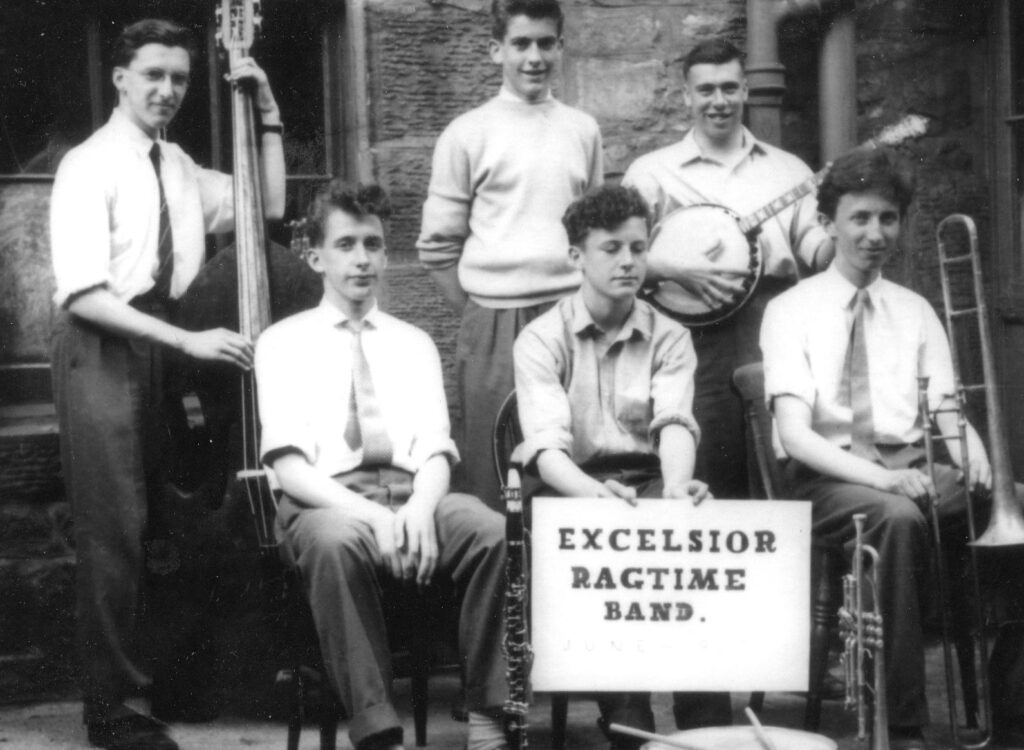
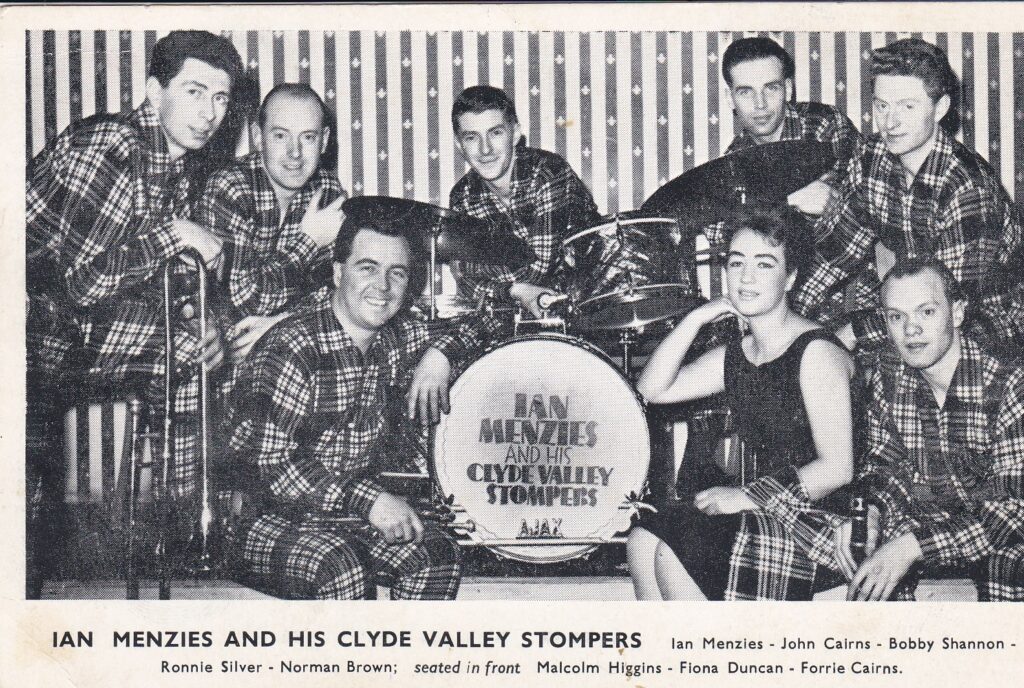
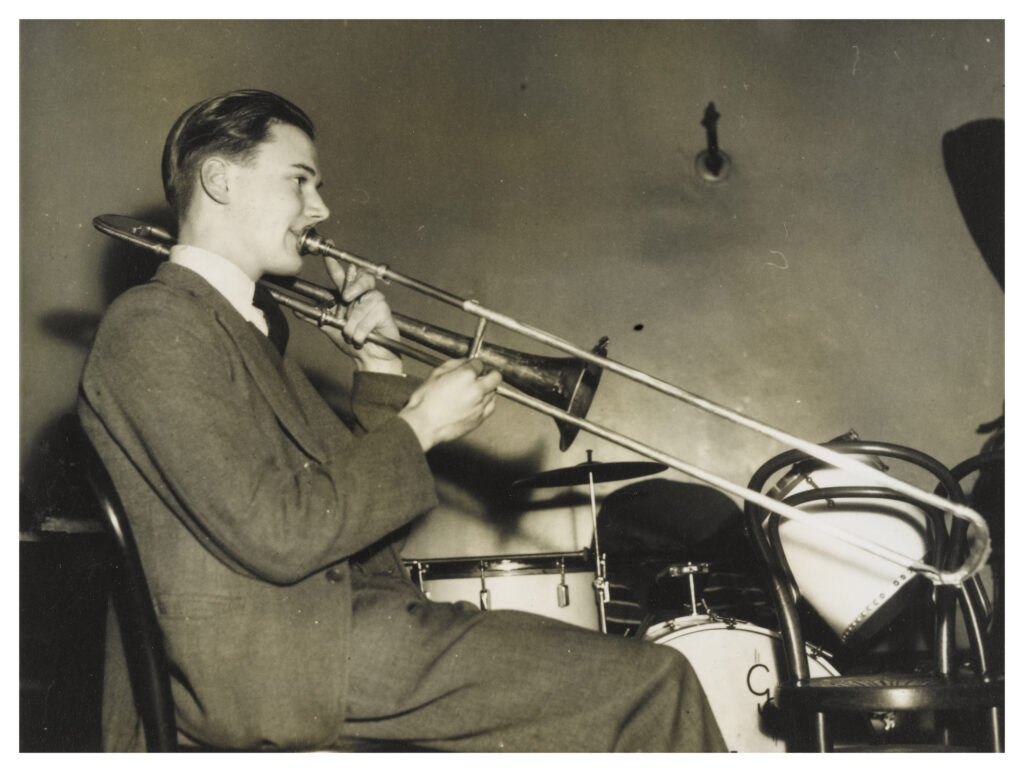
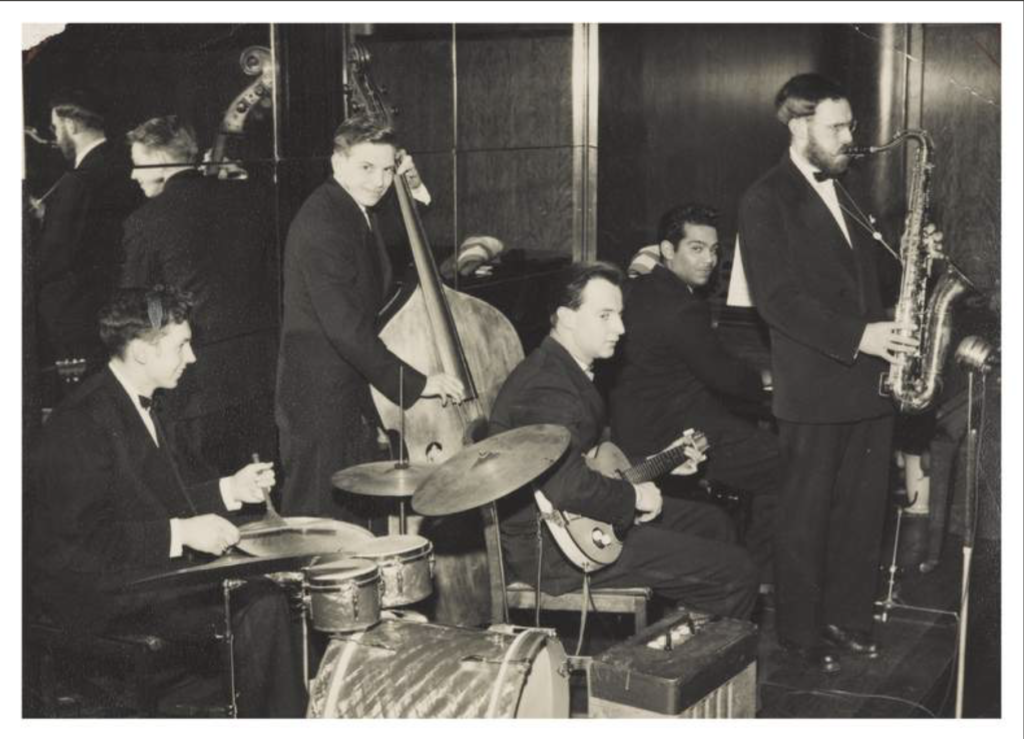
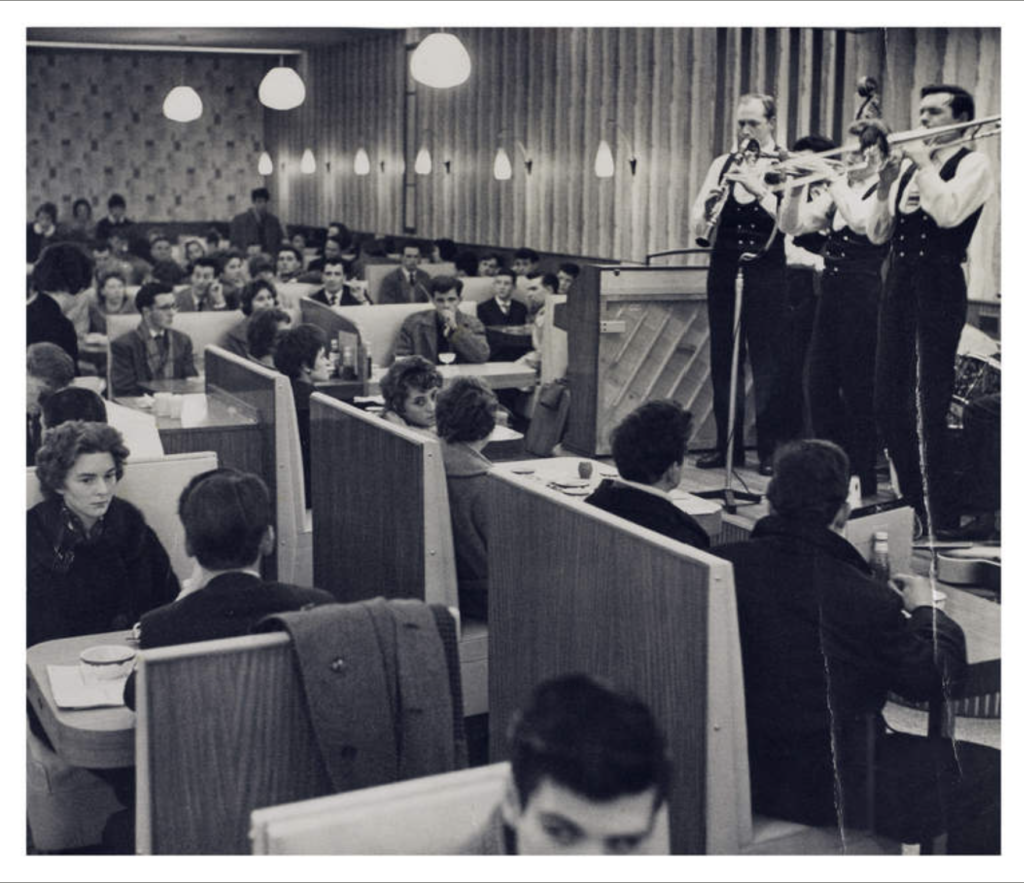
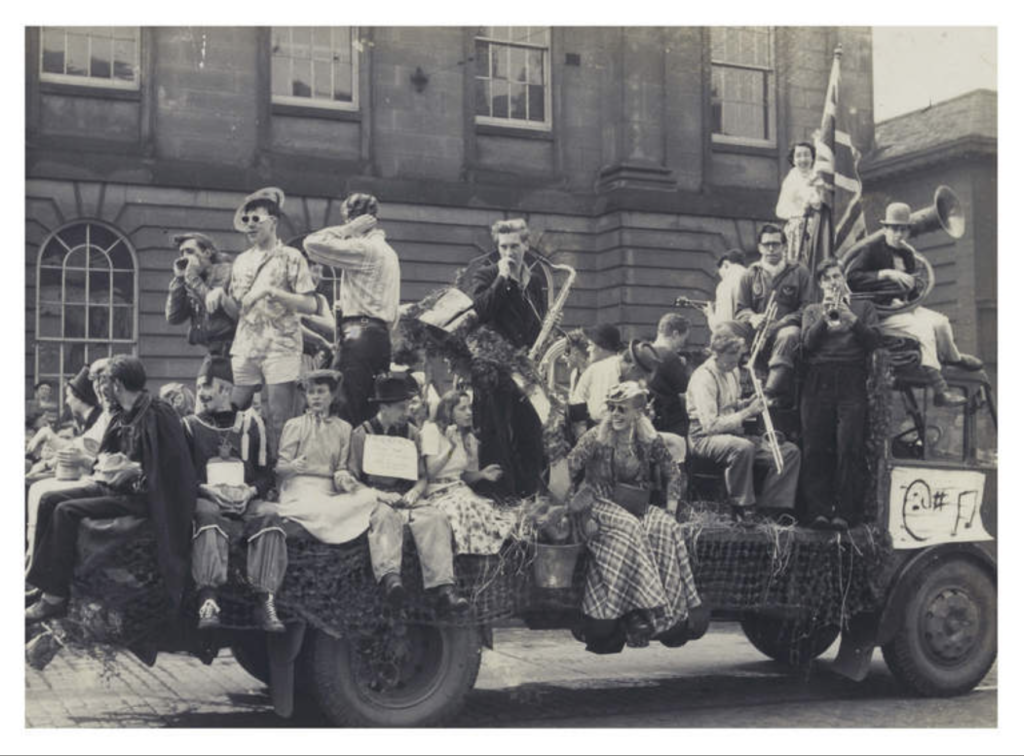
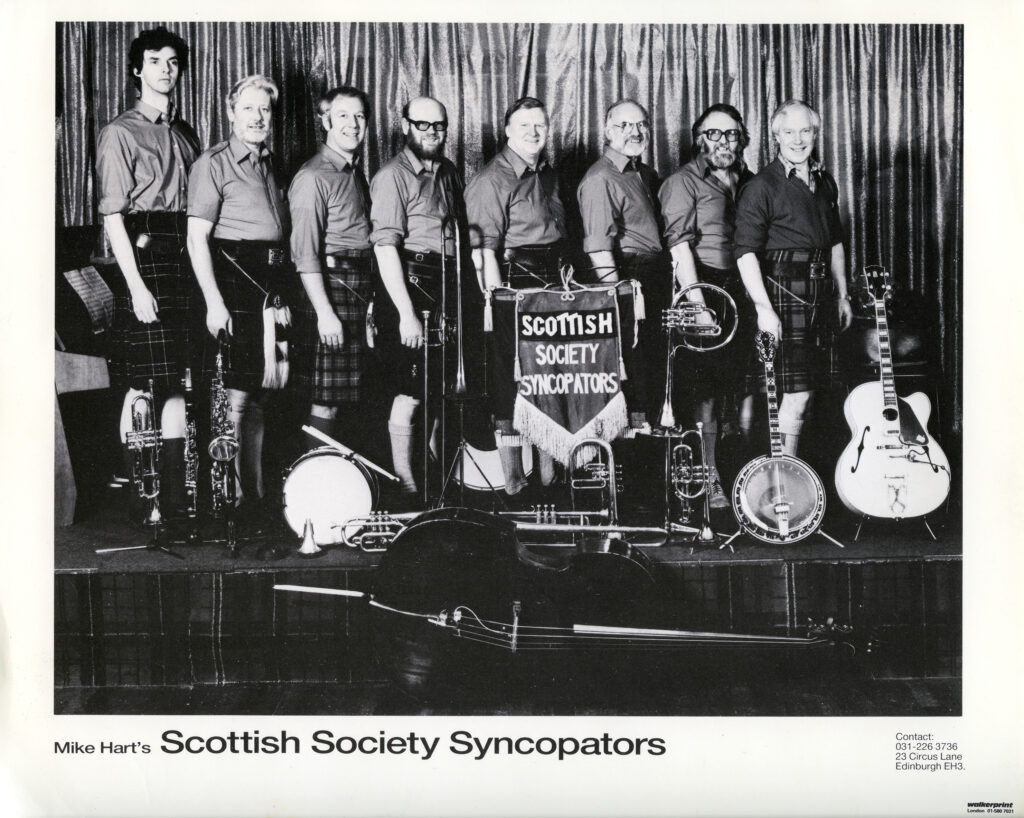
The older generations of Scottish jazz musicians typically came through the ranks through the traditional apprenticeship model, in which the craft was learned from peers on the bandstand.
The talent pipeline for young Scottish jazz is now more likely to be provided through conservatoire jazz programmes alongside a range of formal and informal provisions across the country. This shift in how jazz is learnt has resulted in a generational disruption, with younger musicians often unaware of the giants on whose shoulders they stand.
The SJA is committed to helping to bridge this gap by highlighting the continuum of jazz in Scotland from its early days to the contemporary vanguard.
OUR STRATEGIC PRIORITIES
2026 - 2030
1. Securing our future
Establishing a secure financial base from which to operate and ensure a sustainable future for the archive has to be our foundational priority over the next four years.
To date, the archive has relied on the goodwill of volunteers and board members. While we have been fortunate to receive support through partnership work, we have no paid staff and no substantial funding.
Over the past seven years we have built a strong community of volunteers, developed good governance and operational principles, and built the organisation to the stage where we are now proactively seeking ongoing funding for both core costs and specific project work. We hope that what we have achieved over these years is testament to what we could achieve with financial support and investment.
We also need to find a physical home for the archive’s artefacts. These are currently housed at Edinburgh Napier University, but as the archive has grown this arrangement has become unsustainable. Identifying and securing a permanent home for the collection is a clear objective for this period.
2.Building our community
The SJA is only as strong as the community it serves and the community that sustains it.
Over the next four years we will develop our website to provide a genuine space for community contribution, co-production, and dialogue. We aim to create an active environment where musicians, families, researchers, and enthusiasts can add context, share memories, and help shape the archive’s ongoing development.
Through partnership work, exhibitions, talks and engagement with educational institutions we will extend our reach and grow our vibrant community. Targeted work with intergenerational communities will help us explore changing attitudes to jazz in Scotland and bridge experiences across time.
We will expand our ‘Friends of the SJA’ network to encourage legacy and altruistic giving, and create a wider range of meaningful volunteer roles that reflect the diversity of skills and backgrounds our community brings.
3. Expanding the archive
Scotland’s jazz stories are bigger, more diverse, and more geographically spread than the existing record suggests. We intend to change that.
The archive holds an extensive and growing collection of two-dimensional materials and analogue audio assets donated by the public. Digitising, cataloguing, and making these accessible online is a major undertaking, and one we are committed to progressing systematically over this period. Developing a website that is genuinely navigable - for the casual visitor and the specialist researcher alike - is central to this work.
Throughout, we will actively seek out and platform jazz stories and histories from beyond Scotland’s major urban centres, ensuring the archive reflects the full geographic breadth of the tradition.
We are also committed to taking positive action to address a significant gap in the historical record. Any honest exploration of jazz in Scotland reveals that women were largely marginalised or excluded from the scene for much of its history. While meaningful progress has been made in recent decades, those earlier voices are few, and some are at risk of being lost entirely. Seeking them out, recording them, and foregrounding them within the archive is not supplementary work -it is central to what we are.
OUR AIMS AND AMBITIONS
The strategic priorities above set out what we are committed to delivering over the next four years. Beyond that period, and as our capacity and resources grow, we have a broader set of ambitions for the archive and the community it serves.
Oral histories and living memory
Expanding our oral histories collection is among our most time-sensitive ambitions. We aim to record the voices of older musicians and witnesses to Scotland’s jazz history before those testimonies are lost, while also building a collection that reflects younger generations currently active in the scene. This work will extend our commitment to geographic breadth and gender equity - seeking out voices that have historically gone unheard.
A sustainable and staffed organisation
As funding allows, we aim to move from a wholly volunteer-led model to one that includes paid staff, beginning with project-based roles and building towards core staffing. This will allow us to take on larger funded projects, deepen our partnerships, and ensure the archive’s long-term sustainability.
Reaching wider audiences
We aim to grow the SJA’s profile nationally and internationally, through presence at music festivals, jazz conventions, trade fairs and academic conferences. A quarterly magazine - celebrating both the contemporary Scottish jazz scene and its historical roots - is a longer-term ambition that would serve both community engagement and profile-raising goals.
Scotland’s jazz in education
We hope to strengthen relationships with schools, colleges and universities that embed the archive’s holdings in teaching and research, and to create educational resources that bring Scotland’s jazz history into the classroom.
Telling Scotland’s jazz story
Making the archive genuinely accessible requires more than good cataloguing. We aspire to develop rich, narrative-led online content that brings the archive’s holdings to life. We will use storytelling as a key methodology, developing a user experience that serves the curious general visitor as much as the specialist.
An annotated map of current and historical festivals and venues across Scotland will form one strand of this, offering a spatial dimension to the archive’s holdings and drawing in communities and places that have been underrepresented in the historical record.
SWOT ANALYSIS
S
Strengths
Our Strengths
The SJA is nationally recognised as Scotland’s jazz archive and holds the country’s most comprehensive collection of physical artefacts relating to Scottish jazz history.
The organisation has developed an extensive network of partners across the Scottish jazz community, including individual musicians and bands, festival and event promoters, press and journalists, and funders and cultural policy makers.
The SJA maintains active relationships with comparable archives in the international arena and engages with current theoretical and practical developments in the field through academic research and partnership.
Collectively, the board and volunteers bring a diverse range of professional skills to the archive, spanning industry engagement, academic research, people management, digital literacy, and strategic planning.
W
Weaknesses
Our weaknsesses
The SJA does not currently have a permanent physical home for its collections.
The archive has to date been very modestly funded and remains overwhelmingly reliant on the goodwill of trustees and volunteers whose time is subject to other obligations.
A recent skills audit identified gaps in communications and fundraising expertise on the current board. Addressing these gaps through targeted recruitment is a clear priority.
O
Opportunities
Our Opportunities
The SJA website has the potential to become the authoritative online destination for the history of jazz in Scotland, serving our community, researchers, musicians, educators, and the general public.
Scotland’s jazz community includes many older musicians and witnesses whose memories and testimonies are at risk of being lost. The SJA is well placed to lead a programme of oral history collection that preserves these voices for future generations.
Having taken the time to fully consider the needs, contexts and best practices involved in creating a national music archive, the SJA is now positioned to move forward at pace, with appropriate resourcing, to build its digital infrastructure and grow its audience.
Through its professional networks, the SJA has opportunities to bring its work to wider public audiences through events and exhibitions in collaboration with Scotland’s jazz festivals and academic partners.
Four current board vacancies will be filled through open advertisement to address identified skills gaps and broaden the board's diversity.
T
Threats
Our Threats
The absence of dedicated paid staff threatens both immediate archival priorities and the organisation’s long-term sustainability.
The SJA website is currently hosted on a private server funded annually by the chair of the board. Should this arrangement change, the organisation risks losing both its digital infrastructure and its content.
Physical artefacts collected through public donation are held in temporary storage at Edinburgh Napier University under an agreement that runs until July 2026, after which it will need to be renewed or an alternative arrangement secured.
The memories and material held by older members of Scotland’s jazz community are at constant risk of being lost. The SJA’s currently limited resources make it difficult to respond to this urgency at the scale it demands.